
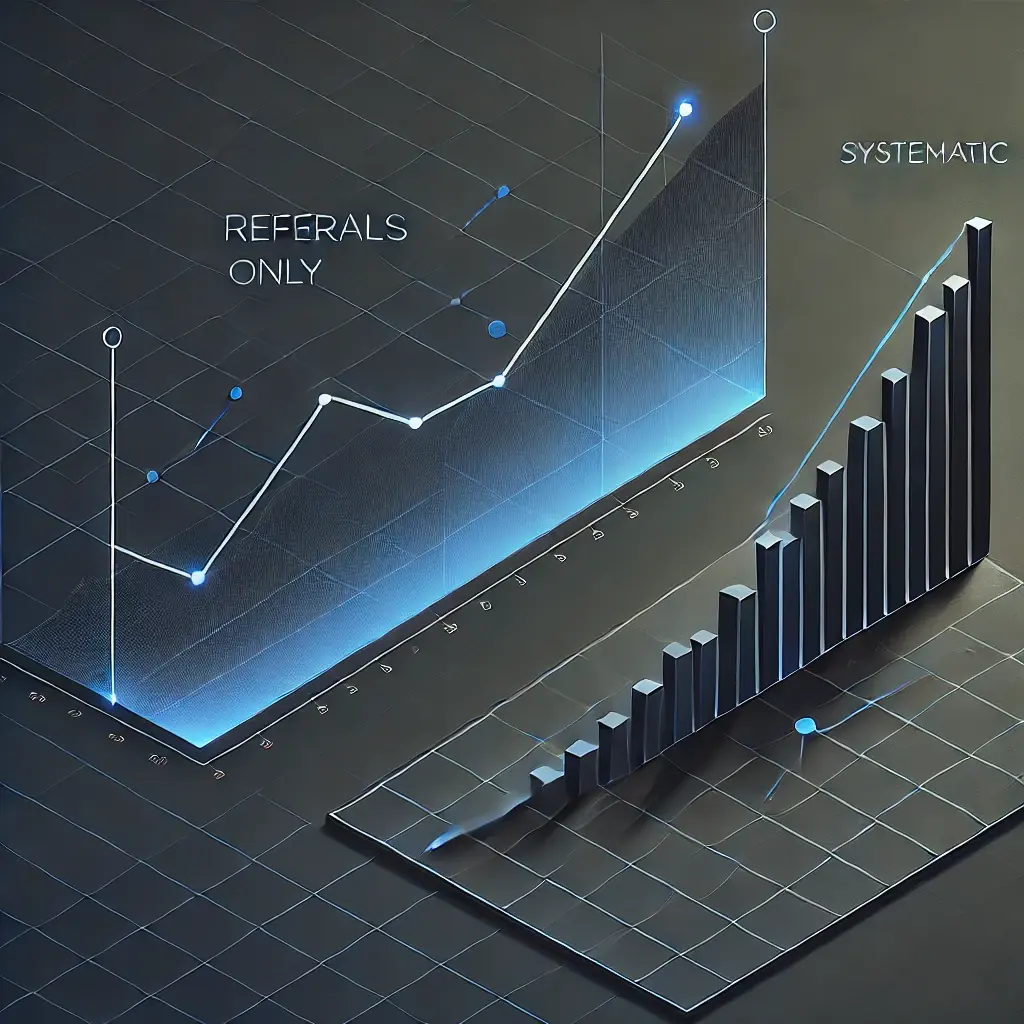
Why Referral-Only Growth Eventually Fails for MSPs
For many MSPs, referrals feel like the gold standard of growth.
They’re warm.
They’re trusted.
They usually close faster than any other lead source.
In the early days, referrals often drive most—or all—new business. But as MSPs mature, a hard truth sets in:
Referral-only growth eventually stalls.
Not because your service isn’t good.
Not because clients aren’t happy.
But because referrals come with built-in limitations that no MSP can outgrow.
Referrals Are Powerful—but They Are Finite
Referrals depend on things you don’t control:
- Your clients need to know someone who needs an MSP
- That person needs to be actively looking
- The timing has to be just right
Even your best clients only know so many business owners. Once their immediate circle is tapped, referrals naturally slow down.
This creates a dangerous pattern for MSPs:
- Strong growth early on
- Followed by long, unpredictable dry spells
- With no clear way to “turn growth back on”
That’s when owners start asking, “Why did our pipeline suddenly disappear?”
The Referral Plateau Most MSPs Hit
Most MSPs hit a referral ceiling somewhere between:
- $1M–$3M in annual revenue
- 20–50 managed clients
At this stage, referrals still happen—but they are no longer frequent or predictable enough to support hiring, expansion, or revenue goals.
The business becomes reactive instead of proactive.
Growth becomes something you hope for, not something you plan.
Why “Just Ask for More Referrals” Doesn’t Work
Many MSPs try to solve the slowdown by pushing harder for referrals.
They add referral requests to QBRs.
They remind clients more often.
They even offer incentives.
While this can help slightly, it doesn’t solve the core problem:
You still don’t control when or how often referrals happen.
Clients don’t wake up thinking about introducing you to other businesses. And forcing the issue often creates awkward conversations that don’t convert anyway.
What Successful MSPs Do Differently
High-performing MSPs don’t abandon referrals.
They de-risk their business by adding predictable customer acquisition on top of them.
Instead of waiting for introductions, they build systems that:
- Consistently introduce them to new, qualified prospects
- Educate buyers before a sales conversation happens
- Position them as the expert—not just another vendor
This approach creates steady pipeline activity even when referrals are quiet.
Predictable MSP Growth Comes From Systems, Not Luck
Modern MSP growth isn’t about spammy cold calls or random marketing experiments.
It’s about building a repeatable engine that runs in the background and supports long-term growth.
That engine typically includes:
- Targeted outbound to ideal-fit prospects
- Educational content that builds trust over time
- Consistent follow-up that stays top of mind
When done correctly, prospects recognize your name before they ever need to switch providers.
Referrals Become Stronger When You Don’t Rely on Them
Here’s the irony most MSPs miss:
Referrals actually perform better when they’re not your only growth strategy.
Why?
Because:
- Your brand is more visible
- Your message is clearer
- Prospects have often already heard of you
Instead of “My friend said you’re good,” referrals turn into
“I’ve been seeing your name everywhere—we should talk.”
That’s a very different conversation.
Referrals Are a Channel—Not a Growth Strategy
Referrals should always be part of an MSP’s growth mix.
But relying on them alone creates unpredictable revenue, stalled growth, and unnecessary stress.
The MSPs that scale past the referral plateau stop waiting for opportunities and start creating them.
They build systems that make growth intentional, measurable, and repeatable.
And once those systems are in place?
Referrals stop being the bottleneck—and start becoming the bonus.